World’s Simplest (and cheapest) Guide to a Great Lawn
4 Simple Rules to Always Follow that will Prevent your Lawn from Getting Worse
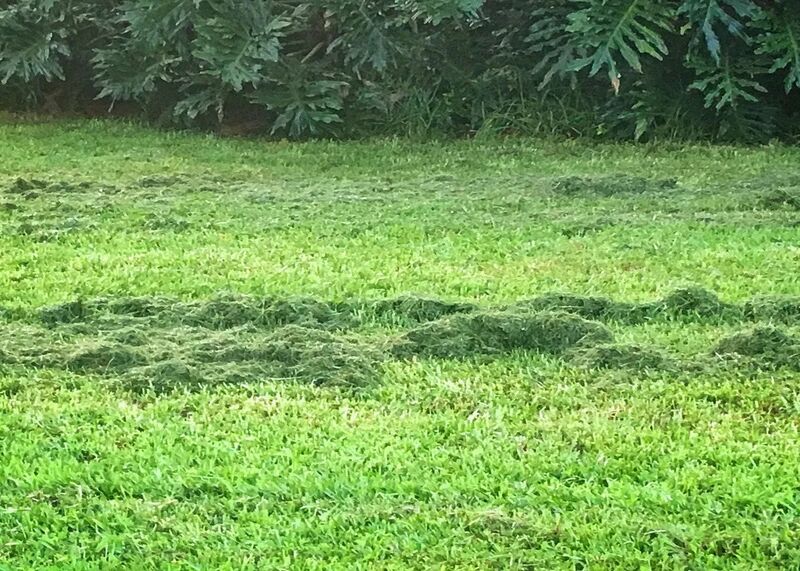
- Set your lawn mower to the highest setting and leave it there forever! This will be about 3.5 to 3.75 inches depending on the mower. Mow your lawn as often as you need to, if you are creating clumps of grass clippings when you mow (see photo 1), you need to mow more often. If you have a battery powered mower, always mow on a full battery (charge after every use).
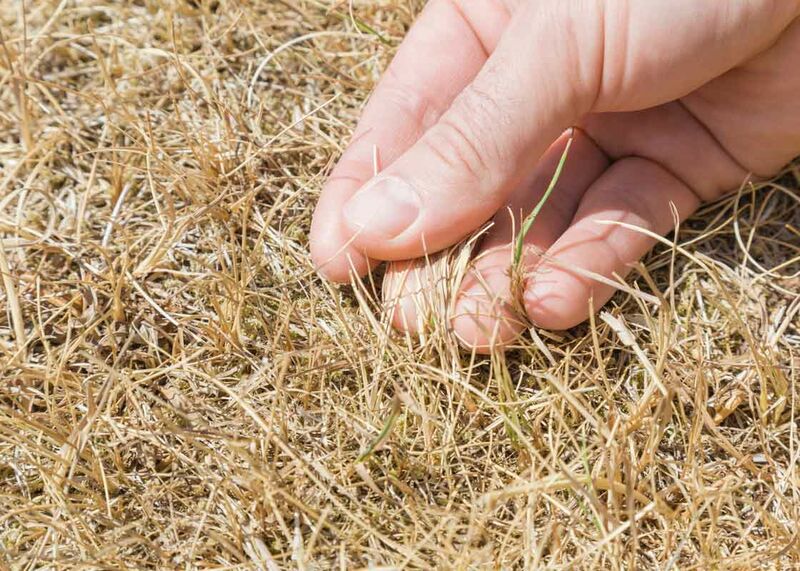
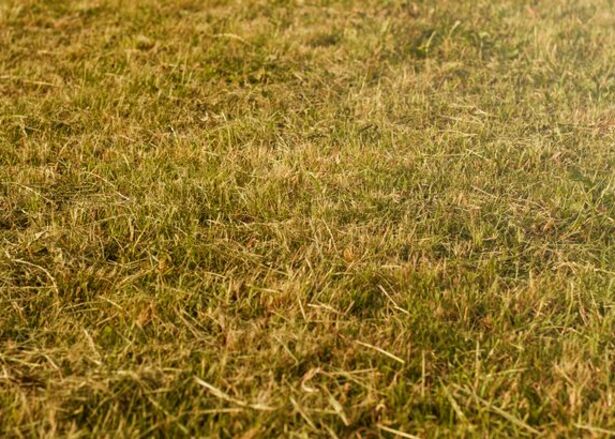
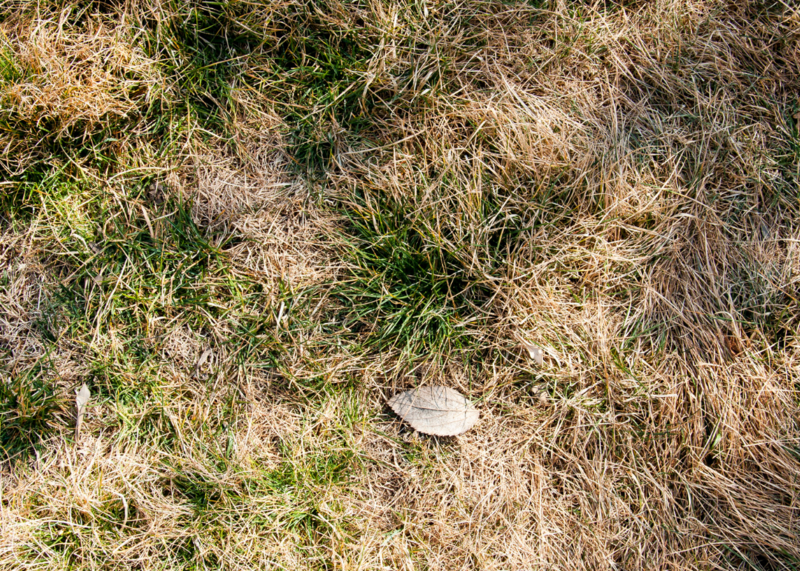
- Do not mow or fertilize your lawn if it is yellow or yellowing. (photo 2, photo 3)
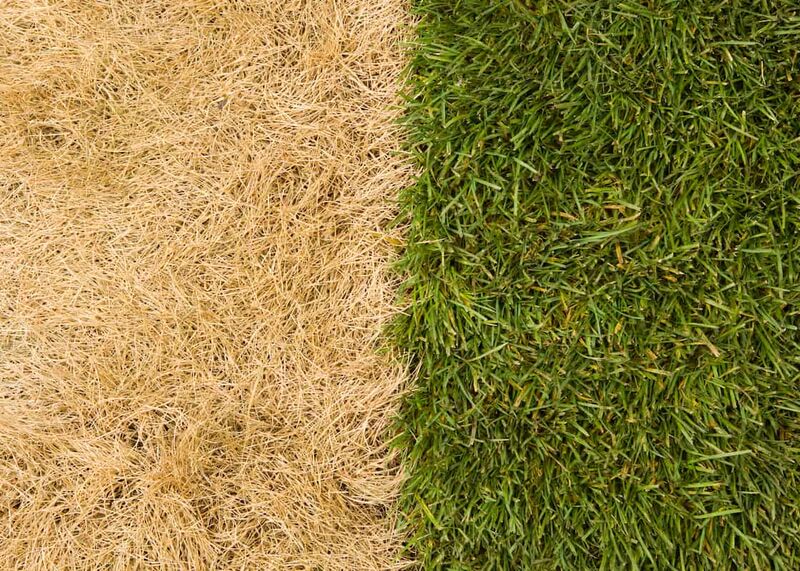
- At the first sign of yellowing (photo 3) (if that yellowing is not caused by chinch bugs or grubs) water your lawn deeply (1 inch or 60 minutes of water), daily OR every second day until it is adequately green (photo 4) again. If you are mowing regularly on the highest setting your grass will rarely (if ever) turn yellow. Just don't let your grass go yellow (dormant, photo 2) because then it will require a lot of water to make the transition to green again. The colour of your lawn is the best answer to the question "should I water my lawn?".
- If you want to improve your soil, bring in large quantities (multiple inches) all at once. When you bring in soil, there will be a significant one-time increase in weeds in the coming weeks/months. Better to do it all at once and get it over with. Besides, the sooner you solve your soil problems, the easier the task ahead.
Start to Finish Lawn Guide
1. Spring Dethatching/Raking – Usually April 1 to April 20
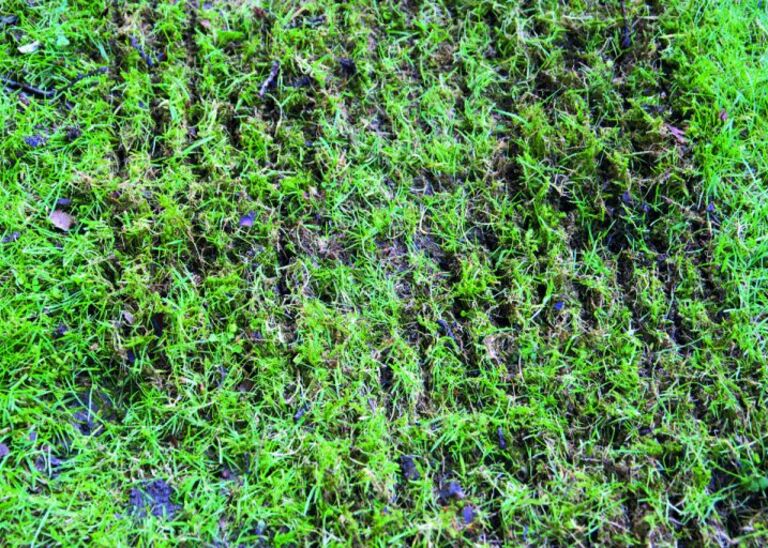
Once the snow has melted and the top layer of soil is no longer hard/frozen, rake or dethatch your lawn (photo 5, photo 6). Giving in a blow (with a leafblower) is also refreshing and helps stand the grass up.
2. 1st Spring Fertilization – Usually April 15 to April 30
After raking or dethatching, and once the night time temps are usually at least 5C and daytime temps are usually at least 12C, apply a fertilizer to your lawn.
Purchase once or per spring fertilizer here. Purchase twice per spring fertilizer here.
Click here to see the tutorials for applying each fertilizer.
3. Spring Overseeding – Usually May 1 to May 31 (June is better than nothing)
Overseed your lawn once night time temperatures will never drop below 5C again, and daytime temps are usually 15C to 20C. Use 10lbs+ per 1000sqft if your lawn is thin. If it’s pretty good, use 5lbs+ per 1000sqft.
Purchase grass seed here. Purchase starter fertilizer here.
Click here to see the tutorial for overseeding your lawn.
4. (Optional) 2nd Spring Fertilization – Usually May 15 to June 7
If you are using a twice per spring fertilizer, apply a second dose 30 days after your first application. Your second fertilization could also be a starter fertilizer if you are doing a spring overseeding. If you have lots of existing mature grass it is best to apply a 2nd dose of spring fertilizer. If the spring overseeding is crucial because you don’t have much existing mature grass it is best to apply a starter fertilizer. You do not need to apply a starter fertilizer at the same time you seed, it can be done up to two weeks after. What’s most important is that you fertilize twice if you are not using a once per spring product. Finally, you could also apply a starter fertilizer no sooner then 30 days after your 1st spring fertilization, even if you used a once per spring product.
Purchase twice per spring fertilizer here. Purchase starter fertilizer here.
Click here to see the tutorials for applying each fertilizer.
5. Spring Weed Spraying – Usually May 25 to June 30
Once it really starts heating up (and especially if you have been watering your lawn a lot because you overseeded), you will suffer the first large wave of this season’s weeds. Time to spray them while the grass is still growing (before summer) to create space for the grass to spread while weeds are stunted (photo 7) by the spray. This should be done after any seeding is mostly finished (the new grass is a decent size). If you end up seeding your lawn in June, you should spray first (wait at least a few days after spraying before you seed). Late May would be good as by that point the wave of weeds has probably arrived.
Purchase weed killers and sprayers here.
Click here to see the tutorial for spraying weeds.
6. (Recommended) Chinch Bug Killer Application – Usually June 15
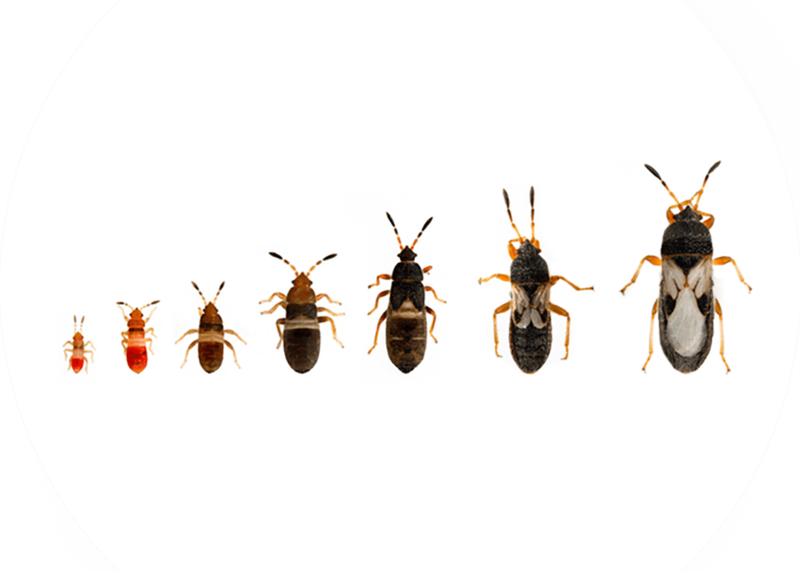
This is always a good idea, it’s only a recommendation because it is expensive and the effectiveness varies. It’s easily possible skipping this application costs you money (damage to your lawn). If you have recent (less than 5 years old) sod, you should do it. If you learn how to identify chinch bugs (photo 8), it will help you make a decision (see my tutorial). This can also be applied post-infestation and is certainly worth it, but will be less effective than as a preventative application.
Purchase chinch bug killer here. We are working with the manufacturer and the Ontario government in order to be able to offer you the product. Currently you need a license to purchase it.
Click here to see the tutorial for identifying and using this product.
7. (Recommended) Summer Fertilization – Usually June 15 to July 15
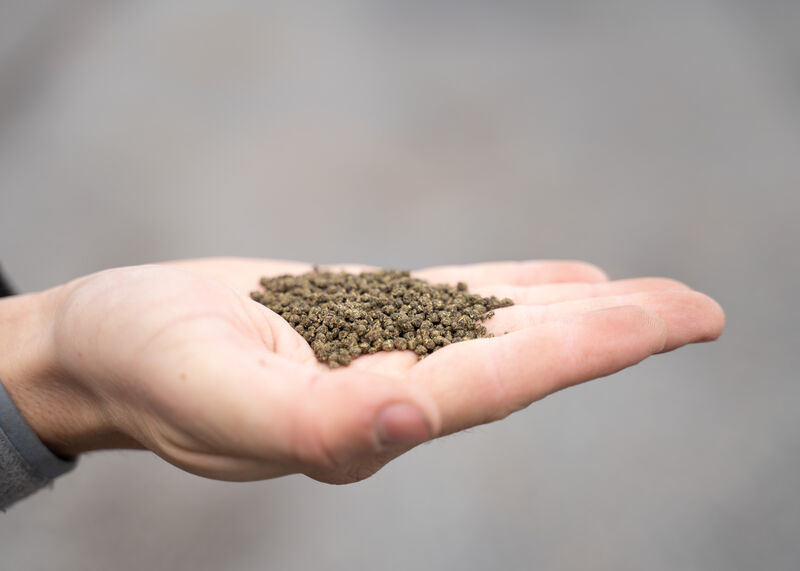
A natural fertilizer (photo 9) can be used during early summer simply as an annual soil improving application, but also to provide a range of micronutrients (which are not found in the traditional fertilizers I recommend you use in spring and fall) that will provide your grass with the stuff it needs to resist summer disease and stress (heat, drought). Lawns that are more susceptible to summer problems (ex: sunny lawns in poor soil) would benefit the most from this optional application. This fertilization doesn’t interfere with your other ones. Don’t worry about burning your lawn, you won’t. Try to apply it a week or two before the brutally hot and dry summer weather arrives, but not sooner than you have to.
Purchase natural fertilizer here.
Click here to see the tutorial for applying this fertilizer.
8. Summer Weed Spraying – Usually July 15 to August 15
Throughout summer, you can spot spray your lawn as many times as you want, but for simplicity’s sake I recommend sweeping the entire lawn for weeds once, during a cooler week of the hottest period of the year. A sunny, cool summer day is perfect so that any stress on the grass isn’t compounded by heat. This application attempts to stop the weeds you couldn’t prevent from seeding and reproducing too much.
Purchase weed killers and sprayers here.
Click here to see the tutorial for spraying weeds.
9. (Optional) Grub Killer Application – Usually August 15
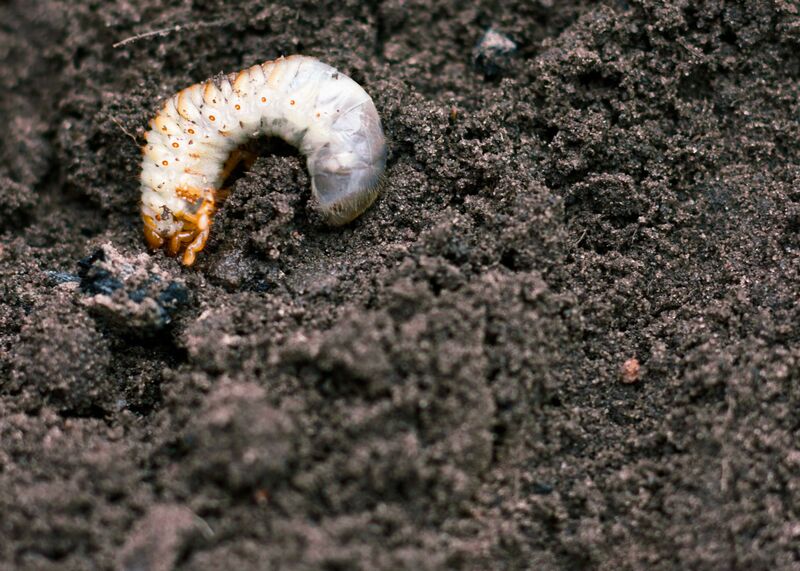
Optional because it is expensive and grubs are not as prevalent (in my opinion) as they used to be. If you have it in the budget or are finding lots of grubs (photo 10) in your soil you should do it. This can also be applied post-infestation and is certainly worth it, but will be less effective than as a preventative application.
Purchase grub killer here. We are working with the manufacturer and the Ontario government in order to be able to offer you the product. Currently you need a license to purchase it.
Click here to see the tutorial for identifying grubs and using this product.
10. Fall Fertilization – Usually August 15 to September 7
When temperatures drop and are regularly 25C or less (and as long as your grass is not showing signs of stress), it is time to apply fertilizer for the fall. One single application, regardless of what fertilizer product you are using, is sufficient for fall.
Purchase a fertilizer for the fall application here.
Click here to see the tutorials for applying this fertilizer.
11. Fall Overseeding – Usually August 15 to September 30
Overseed your lawn once daytime temperatures are regularly 25C or less, or wait until it’s cooler but before night time temperatures are regularly dipping below 5C. Use 10lbs+ per 1000sqft if your lawn is thin. If it’s pretty good, use 5lbs+ per 1000sqft. If it’s warmer the seed will grow more quickly but dry out faster. You will also get more weeds if you water. If it’s cooler the seed will grow more slowly but require less water and watering will result in less weeds.
Purchase grass seed here. Purchase starter fertilizer here.
Click here to see the tutorial for overseeding your lawn.
12. Fall Weed Spraying – Usually September 1 to September 30
Good to spray one last time as weeds are still actively dropping seeds. Few new weeds will be popping up after this application. This should be done after any seeding is mostly finished (the new grass is a decent size). If you end up seeding your lawn later in September, you should spray first (wait at least a few days after spraying before you seed).
Purchase weed killers and sprayers here.
Click here to see the tutorial for spraying weeds.
13. (Optional) Fall Aeration – Usually October 1 to October 30
Once it gets chilly and the top of your grass stops growing, the roots are taking over. Aeration makes holes for the roots to push through (which is easier than pushing through soil). This is best combined with a winter fertilizer which will boost root growth. Optional because it’s not a huge deal.
14. (Optional) Winter Fertilization – Usually October 1 to October 30
Once it gets chilly and the top of your grass stops growing, the roots are taking over. This will give your roots a boost when they are looking for it. Best combined with aeration. Optional because it’s not a huge deal.
Purchase winter fertilizer here.
Click here to see the tutorial for applying this fertilizer.
15. Leaf management – Usually October 15 to November 15
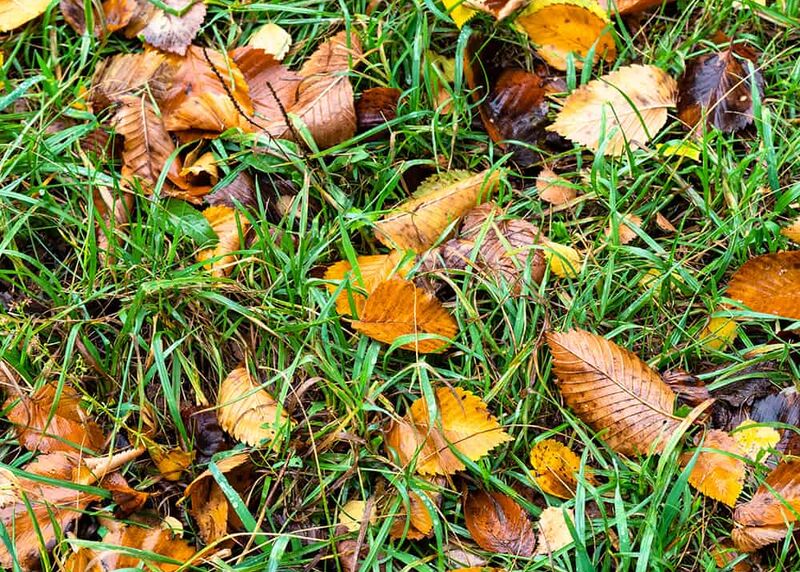
Mulch your leaves by running them over with your lawnmower. If you have too many to do that, bag some or all of them. Just know that mulched leaves are good for your soil and wet leaves (photo 11) will kill your grass if they smother your lawn.
Photos